


 08071930624
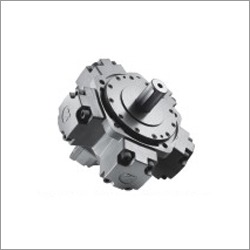
Radial Piston Motors
10000.00 INR/Piece
Product Details:
- Bearing Type Heavy Duty Roller Bearing
- Torque Up to 2500 Nm
- Features High torque at low speed, compact design, robust construction, low maintenance
- Motor Type Radial Piston Motor
- Ambient Temperature -25 to +80C
- Starting Type Direct On Line (DOL)
- Sealed Type Sealed
- Click to View more
X
Radial Piston Motors Price And Quantity
- 1 Piece
- 10000.00 INR/Piece
Radial Piston Motors Product Specifications
- Heavy Duty Roller Bearing
- Varies by Model
- Black
- -25 to +80C
- Radial Piston Motor
- Hydraulic
- Overload Protection
- Up to 2500 Nm
- High torque at low speed, compact design, robust construction, low maintenance
- Up to 90 kW
- IP65
- ISO 9001 Certified
- Up to 90 kW
- Oil Cooled
- Sealed
- Direct On Line (DOL)
- 50 mm (typical)
- Low Noise
- Hydraulic Radial Piston Motor
- Flange Mounted
- High Efficiency
- Up to 120 HP
- 95 kg (approx.)
- Up to 320 bar
- up to 1300 RPM
Radial Piston Motors Trade Information
- 100 Piece Per Week
- 3 Days
Product Description
We are here supplying the Radial Piston Motors for use in various industries and processes. They are made available by us for commercial purposes and are very useful. The offered piston motors are slowly running hydraulic motors which operate according to the multiple-stroke principle. This type of motor is used to power heavy duty equipment in high power applications. It has an even number of pistons that operate in sequences of working pressure and charge pressure in a reciprocating motion. The offered Radial Piston Motors are made available by us for efficient performance and are very useful. They are very durable.
Frequently Asked Questions:
1. How does a radial piston motor work?
Ans. Hydraulic fluid below stress from a pump is fed to every piston by fluid paths inside the crankshaft. Pressurizing the pistons with direct hydraulic strain from the fluid, while mixed with the offset drive shaft, produces a turning movement.
2. What is the difference between radial and axial piston motors?
Ans. Radial-piston cars function as pistons arranged perpendicularly to the crankshaft's axis. As the crankshaft rotates, the pistons are moved linearly via the fluid pressure. Axial-piston designs are characteristic of a number of pistons organized in a circular pattern internal a housing (cylinder block, rotor, or barrel).
3. What is the performance of the radial motor?
Ans. When used effectively, our radial flux motor can gain efficiencies of as much as ninety-four percent. Parameters to carefully consider are torque and velocity necessities of the motor. Torque to speed curve, in which the desired torque at diverse speeds is distinctive.
High Efficiency and Reliability
Our radial piston motors are built for high efficiency and consistent operation in extreme environments. With a sealed design, corrosion-resistant surface, and vibration level under 2.5 mm/s, these motors offer stable performance and longevity. The use of heavy-duty roller bearings and robust construction reduces maintenance requirements and extends service life, making them ideal for heavy machinery usage.
Versatile Application and Control
Suitable for applications in construction, mining, marine, and industrial automation, these motors can be controlled manually, hydraulically, or electrically for flexible operation. The bi-directional rotation and compatibility with standard BSP/SAE port connections allow seamless integration with various equipment. Their compact design and high starting torque make them a preferred choice for challenging operational environments.
FAQs of Radial Piston Motors:
Q: How do radial piston motors improve performance in construction and mining equipment?
A: Radial piston motors provide high starting torque at low speeds, making them ideal for heavy machinery that requires stable power delivery under load. Their robust design and overload protection ensure reliable operation, even in demanding construction and mining environments.Q: What fluid types are suitable for these radial piston motors?
A: These motors are compatible with mineral oils adhering to ISO VG 32, 46, or 68 standards. Such oils provide optimal lubrication, cooling, and protection for internal components, supporting both efficiency and longevity.Q: When should maintenance be performed on radial piston motors?
A: Routine maintenance should be scheduled as per manufacturers recommendations, usually based on operational hours or application demands. Thanks to the heavy-duty roller bearings and corrosion-resistant finish, these motors require low maintenance compared to conventional models.Q: Where can radial piston motors be installed and operated?
A: These motors are designed for installation in construction machinery, mining equipment, marine systems, and industrial automation processes. Their IP65 rating and sealed construction allow use in harsh environments with temperatures ranging from -25C to +80C.Q: What is the process for selecting the right motor model for an application?
A: Selection depends on displacement requirements, maximum flow rate, pressure, control type, and mounting preferences. Consult with the manufacturer or supplier to match the motors specifications (such as torque, speed, output power, and shaft diameter) to specific operational needs.Q: How does the motors oil-cooled design benefit users?
A: The oil-cooled construction keeps motor temperatures regulated during extended use, minimizing wear and thermal stress. This results in higher efficiency, reduced risk of overheating, and longer motor lifespan.Tell us about your requirement

Price:
Quantity
Select Unit
- 50
- 100
- 200
- 250
- 500
- 1000+
Additional detail
Mobile number
Email


 Send Inquiry
 Send SMS
 Call Me Free
PJS ENGINEERS
GST : 24AACFP1776A1ZO
GST : 24AACFP1776A1ZO

- Plot No-F-21-22, Adarsh-II Industrial Estate, Behind Ashish Cinema, Opposite Gurudwara, Odhav,Ahmedabad - 382415, Gujarat, India
- Phone : 08071930624

- Mr Jitendra Surelia (Partner)
- Mobile : 08071930624
-
 info@pjsengineers.com
 Send Inquiry
|

PJS ENGINEERS
All Rights Reserved.(Terms of Use)
Developed and Managed by Infocom Network Private Limited.
Developed and Managed by Infocom Network Private Limited.

